Service Design for Customer Services

Context

icon
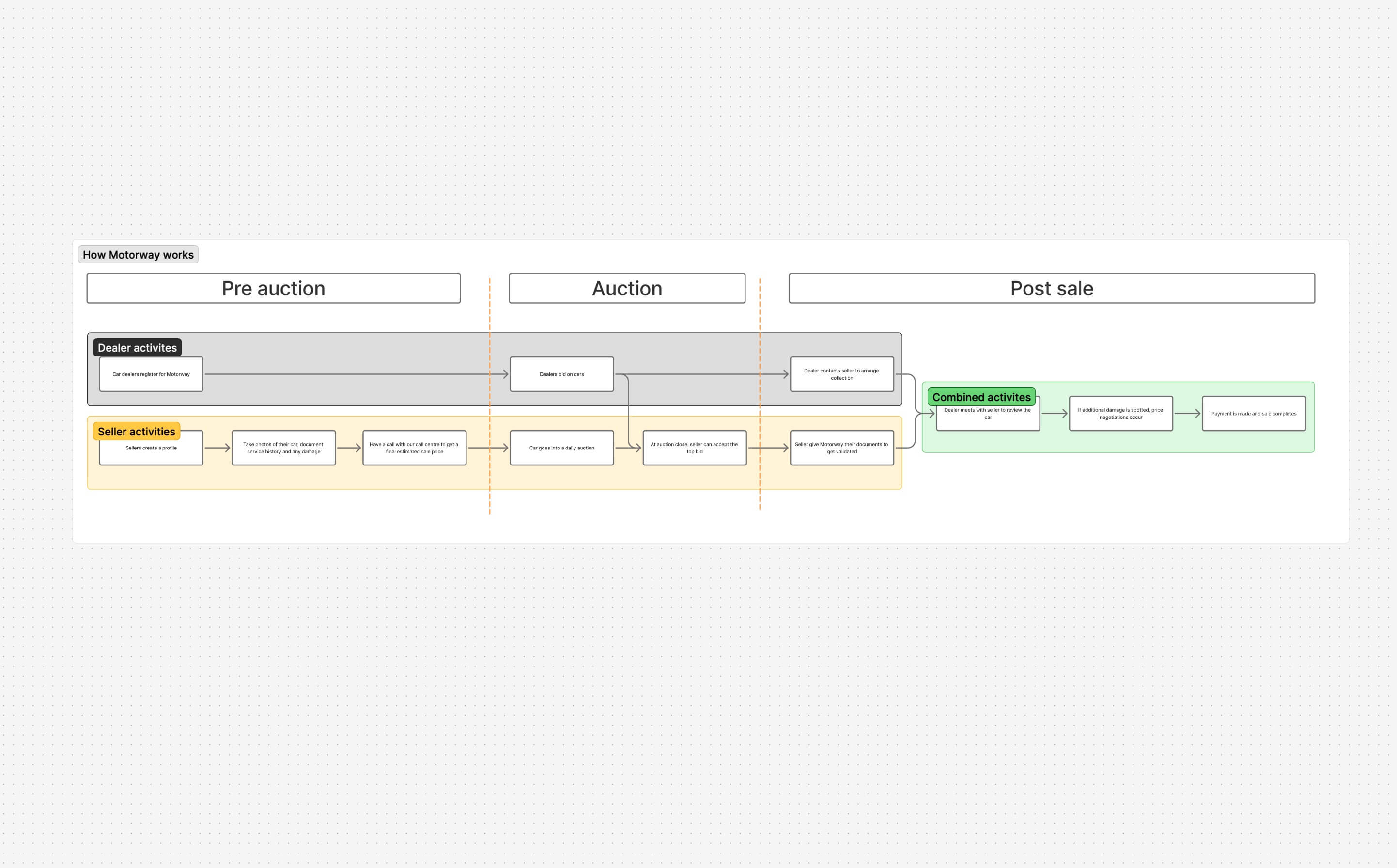
How Motorway works

Motorway is an online marketplace for selling used cars. Private sellers profile their vehicle, it goes into a blind auction where car dealers bid. When the auction closes, the seller can accept or decline the top bid.
Once a sale is agreed, the dealer either collects the car themselves or uses Motorway Move — Motorway's optional collection service — to have it inspected and transported. Payment happens either by direct bank transfer, or through Motorway's payment product.

Service map showing how Motorway works end-to-end
High-level overview of the general Motorway experience for both sides of the market.

Project goal

To understand and map the touch points across our customer journeys, highlight issues where internal workflows and product choices hampered our customer and colleague experience and identify themes of work my teams could tackle to improve things.

Why do this?

I’d noticed numerous issues through observation and interviews with our Customer Support Agents in my 2 months at Motorway. Drawn out internal communications, manual processes and legacy ways of working, all slowed down their ability to service our Customers.

Through 2020 to 2022, Motorway had rapidly scaled its operations as sales volumes increased. Their CS and Sales teams at the time numbered around 220 people across Brighton, UK and Durban, South Africa. They used a mix of third-party and in-house systems to manage their workflows and customer data.

I started a service design project to develop my own and my team's understanding of issues our users faced whilst trying to provide a five-star customer experience.

My role

Senior Product Designer for 3 squads: Agent Dashboard, third-party systems and Machine Learning.

Research

Over 2.5 weeks, I conducted around 25 interviews, call listening and pairing sessions with various customer support teams and management.

I included Developers, other Designers and Product Managers, QA, and our Data Scientist in the process. Giving some of them direct access to users for the first time, and helping them develop empathy for how our products were used.

Involving the whole team in the research process brought a wide range of perspectives and inputs, and really helped downstream when we started building out some solutions. With everyone on the same page very early on.

We used Miro and Notion for mapping processes and documenting insights, allowing a collaborative and transparent research process.

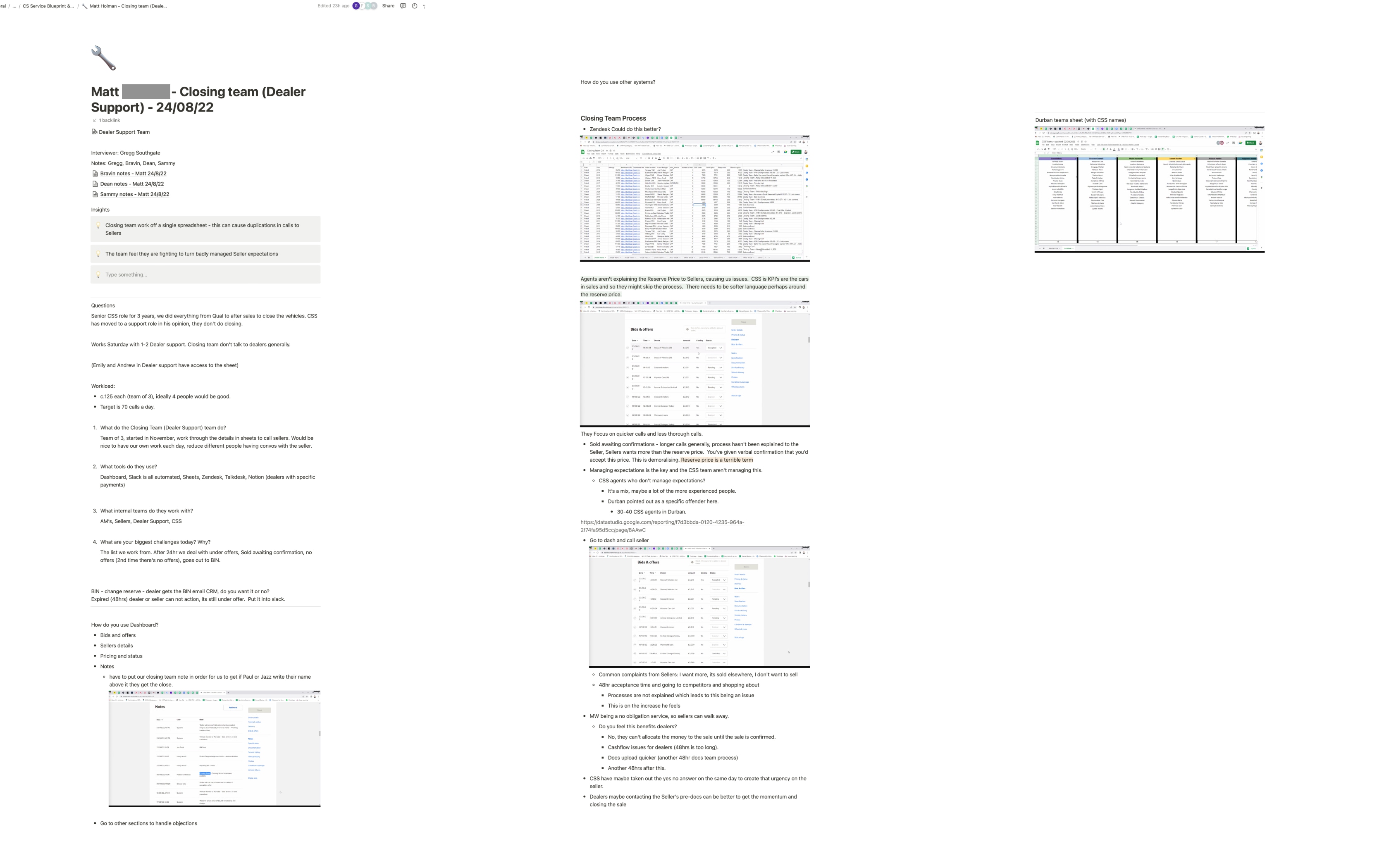
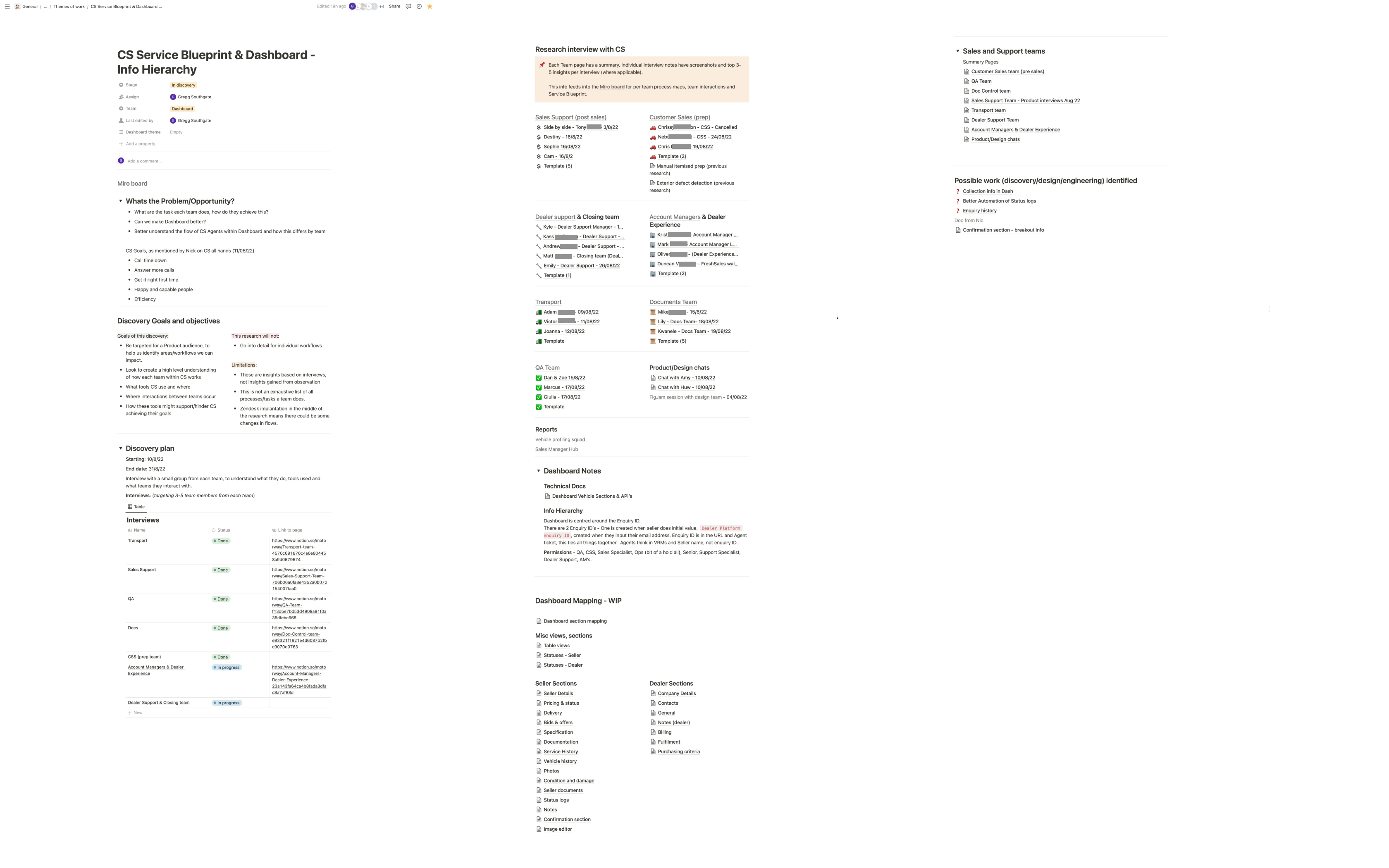
Notes from a customer support agent interview with the Closing team at Motorway.Service design research plan and working document used to capture insights across the project.

Key insights and findings

The research pointed to several strategic themes. Motorway needed a clear articulation of its target end-to-end customer experience — not just individual product features, but the full service vision including what happens between digital touchpoints and behind the scenes.

This meant shifting from siloed product thinking to service thinking: how do the pieces fit together across the full seller and dealer journey?

Reducing unnecessary internal communication would directly free CS agents to focus on customers. Account Managers and Sales teams needed better, more accessible data tools. And the post-sale process — sale finalisation, transport, payments, and collection — needed significant attention as the single physical touchpoint in an otherwise digital service.
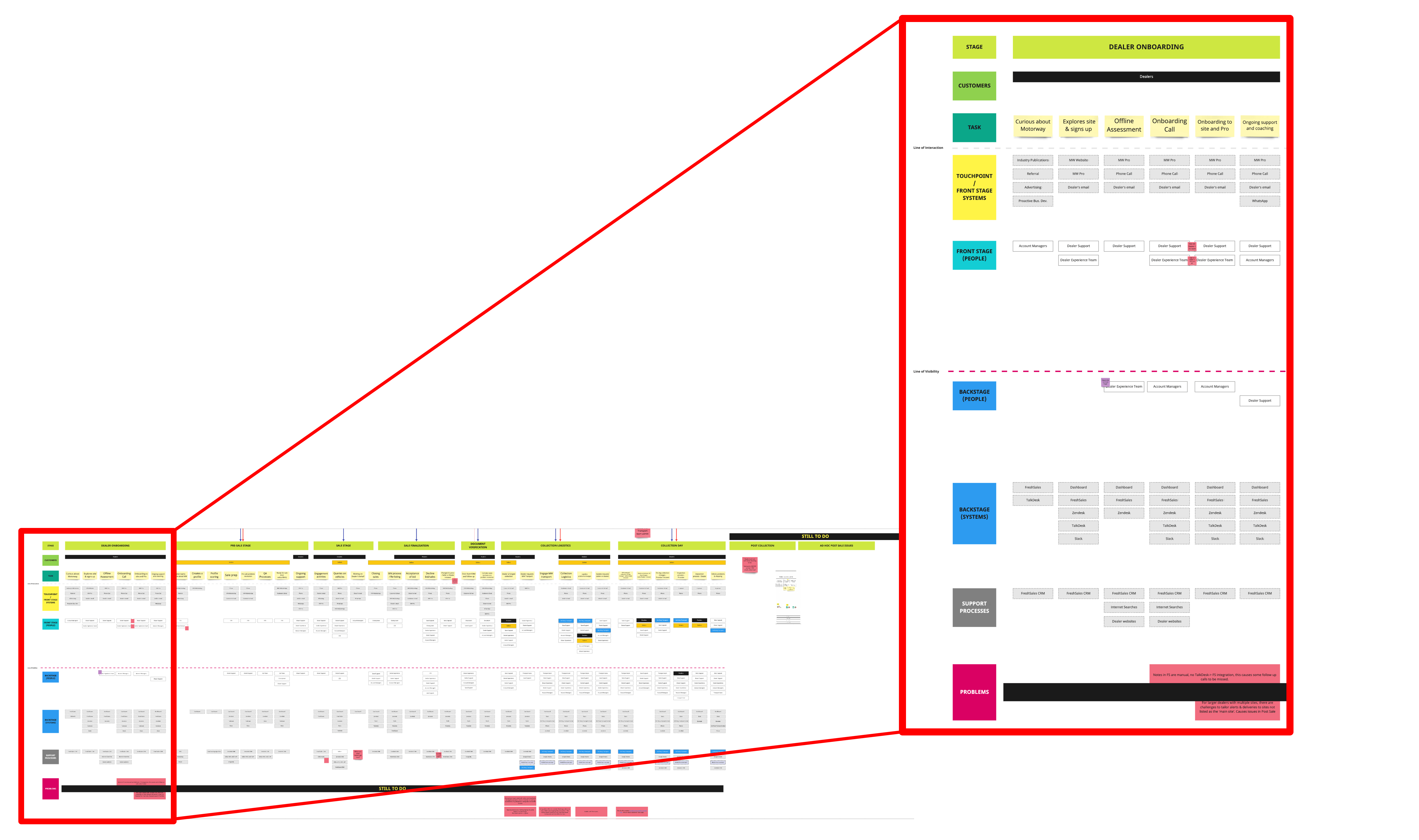
Service design diagram showing customer support workflow across multiple systems
The beginning section of the Motorway service blueprint I created

Problems in customer support

Lack of problem ownership

I mapped what each of the seven CS&S teams actually did day-to-day — their tasks, tools, where they sat in the overall process, and how they interacted with other teams.

Seller teams only communicated with sellers; dealer teams only with dealers. This siloed approach meant that resolving most issues required significantly more internal coordination and resource, extending resolution times.

This cross-team view made the systemic nature of the problems visible: it wasn’t any single team failing, but the gaps between teams and the absence of shared information creating friction at almost every stage.
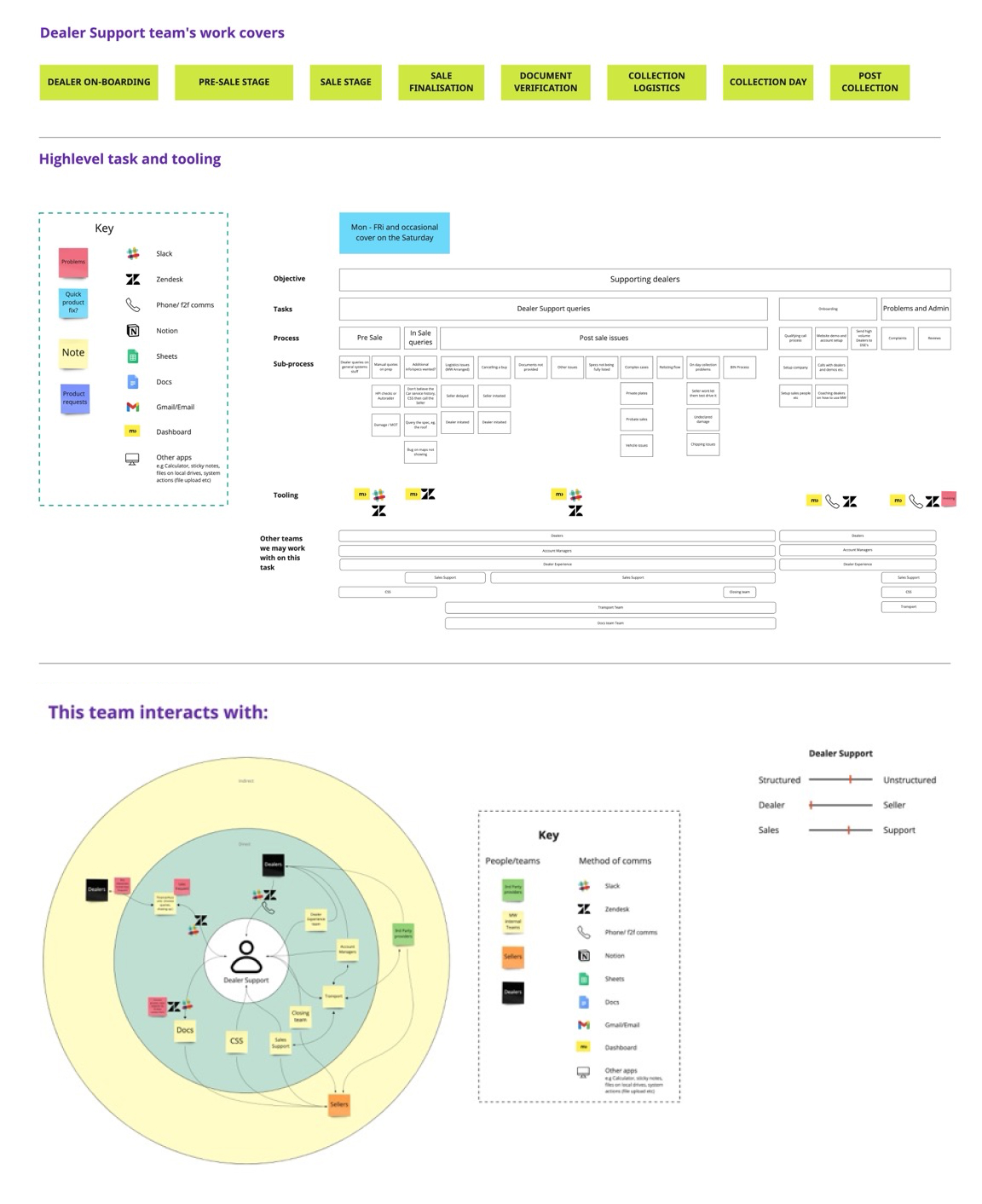
Motorway dealer support team documentation and workflow
Dealer Support team covered the end-to-end process for dealers (buyers) only
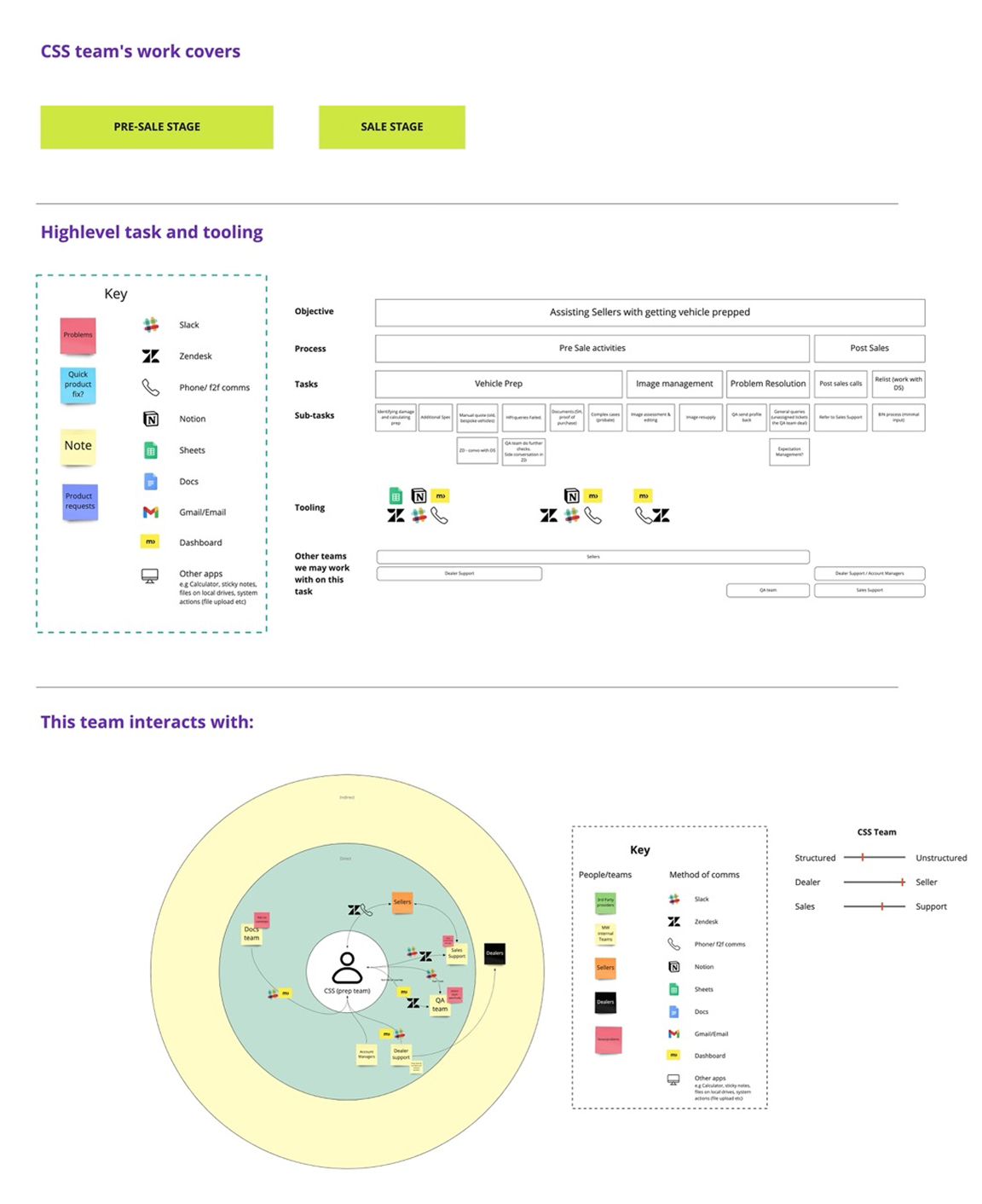
Motorway sales preparation team documentation and workflow
The CSS team's focus was on pre sale activities and on the seller side only

Transparency gaps

While Zendesk had been introduced to improve visibility, the implementation appeared to be a 'lift and shift' from previous Slack-based workflows. Teams had limited insight into what was happening in CRM or with cases owned by other groups, leading to duplicated effort and customer frustration.

Transport and timeframe frustrations

Dealers experienced pain around delays at multiple points: the time taken for sellers to accept bids, delays in clearing the review of seller documentation, and slow transport logistics. These compounding delays created cash-flow challenges for dealers and eroded trust in the service.

Better hardware and account access for agents

The South African agents had old small monitors. The apps rendered terribly on smaller screens, leaving them to find long workarounds to complete what should have been simple actions.

Internet access was also slow, and the app loaded full resolution images that were not used by the team.

I shared this with other product teams who contributed various sections within the Dashboard product and established a best practice for ways to build for smaller desktop screens.
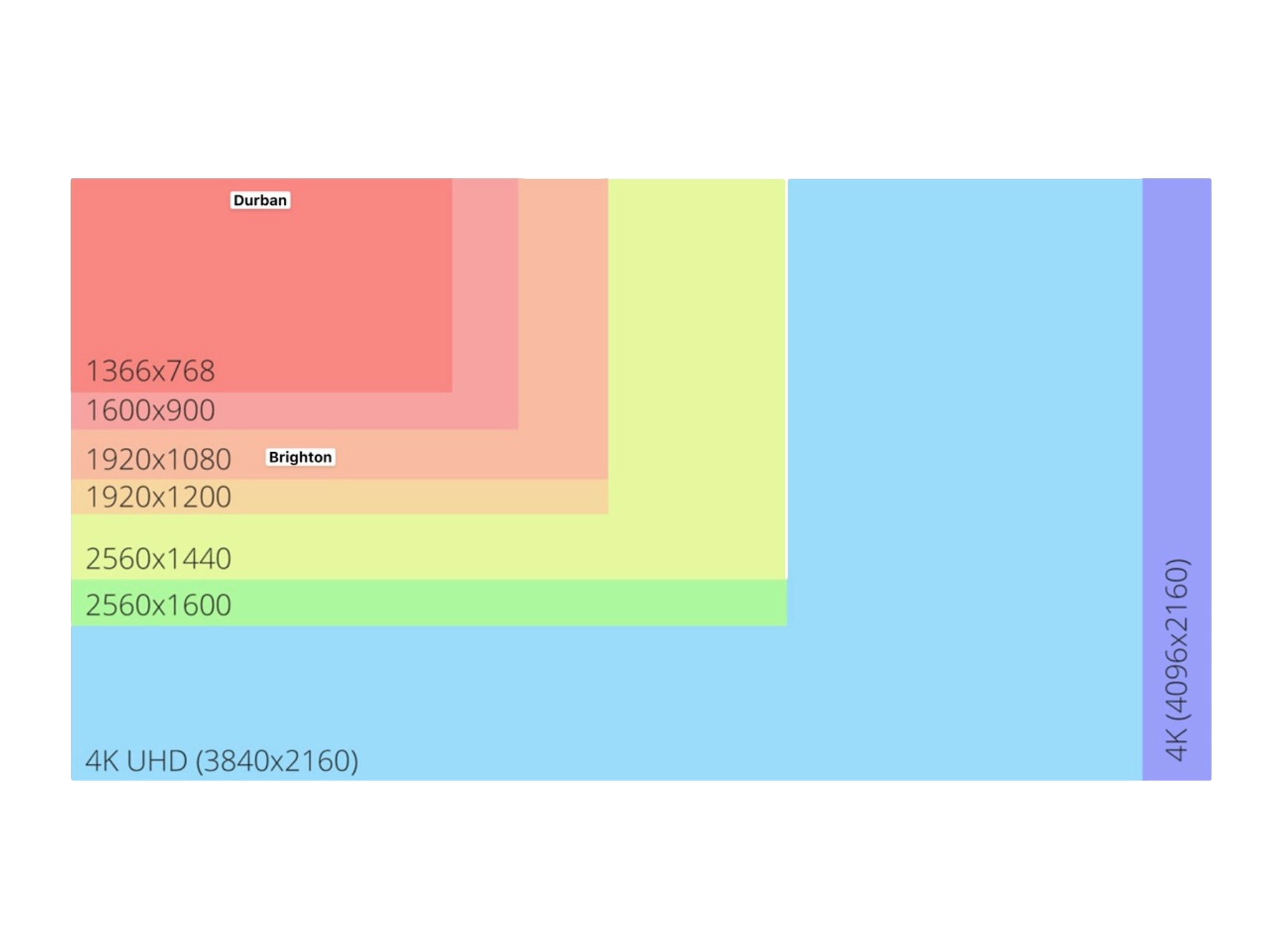
Side-by-side comparison of the agent dashboard rendered on the larger Brighton monitors versus the smaller Durban screens.
Illustrating the screen resolution issue between the two offices
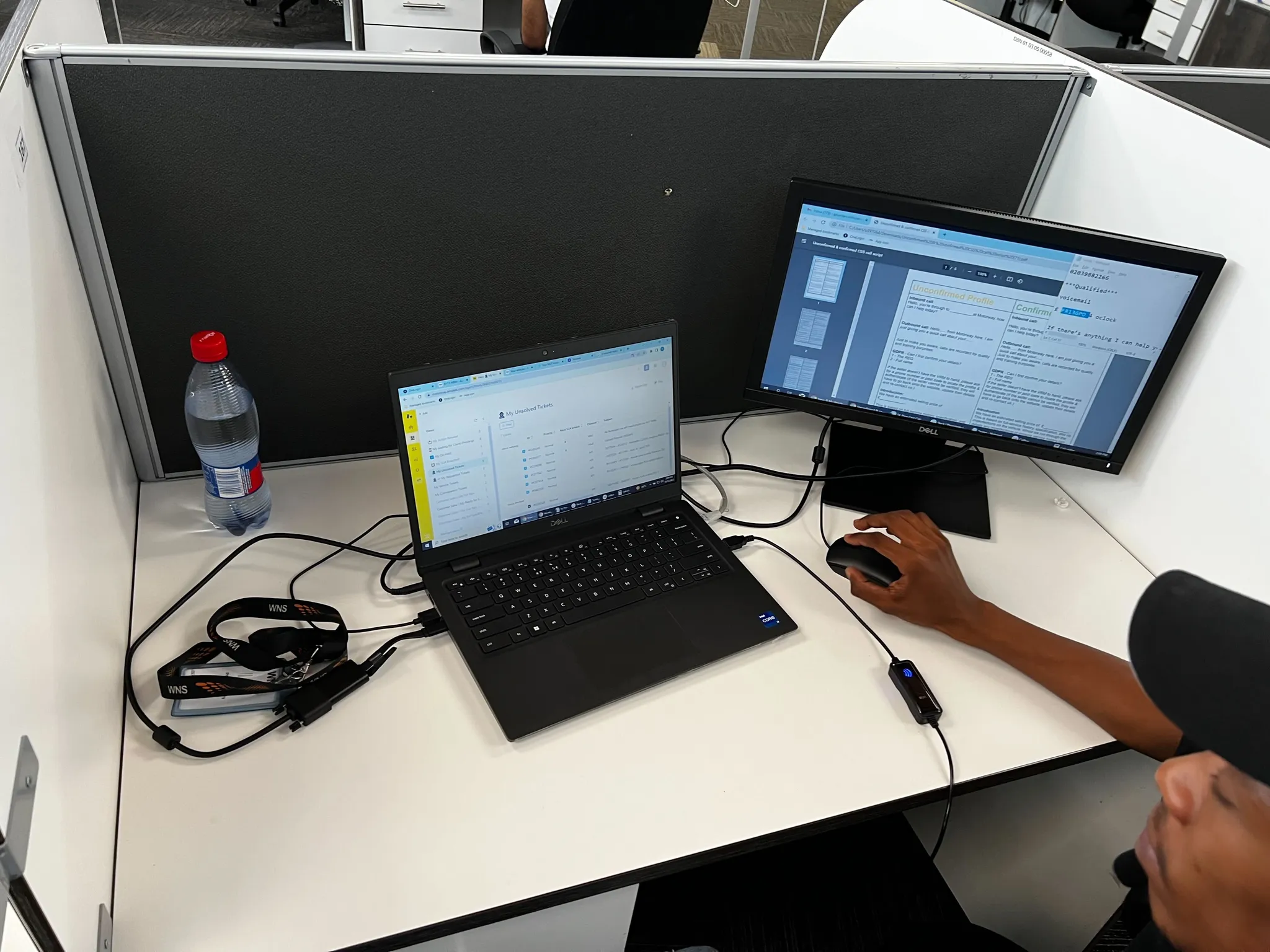
Motorway customer support team in the Durban, South Africa office.
A typical desk in the Durban office

Problems in product

Streamline the post-sale process

Motorway had zero product presence at this crucial stage of the transaction. Sales finalisation, transport, payments, and collection represented the critical physical touchpoint in the service. Improving this phase would have an outsized impact on customer satisfaction.

*Turns out this took a few years for the business to eventually look into.
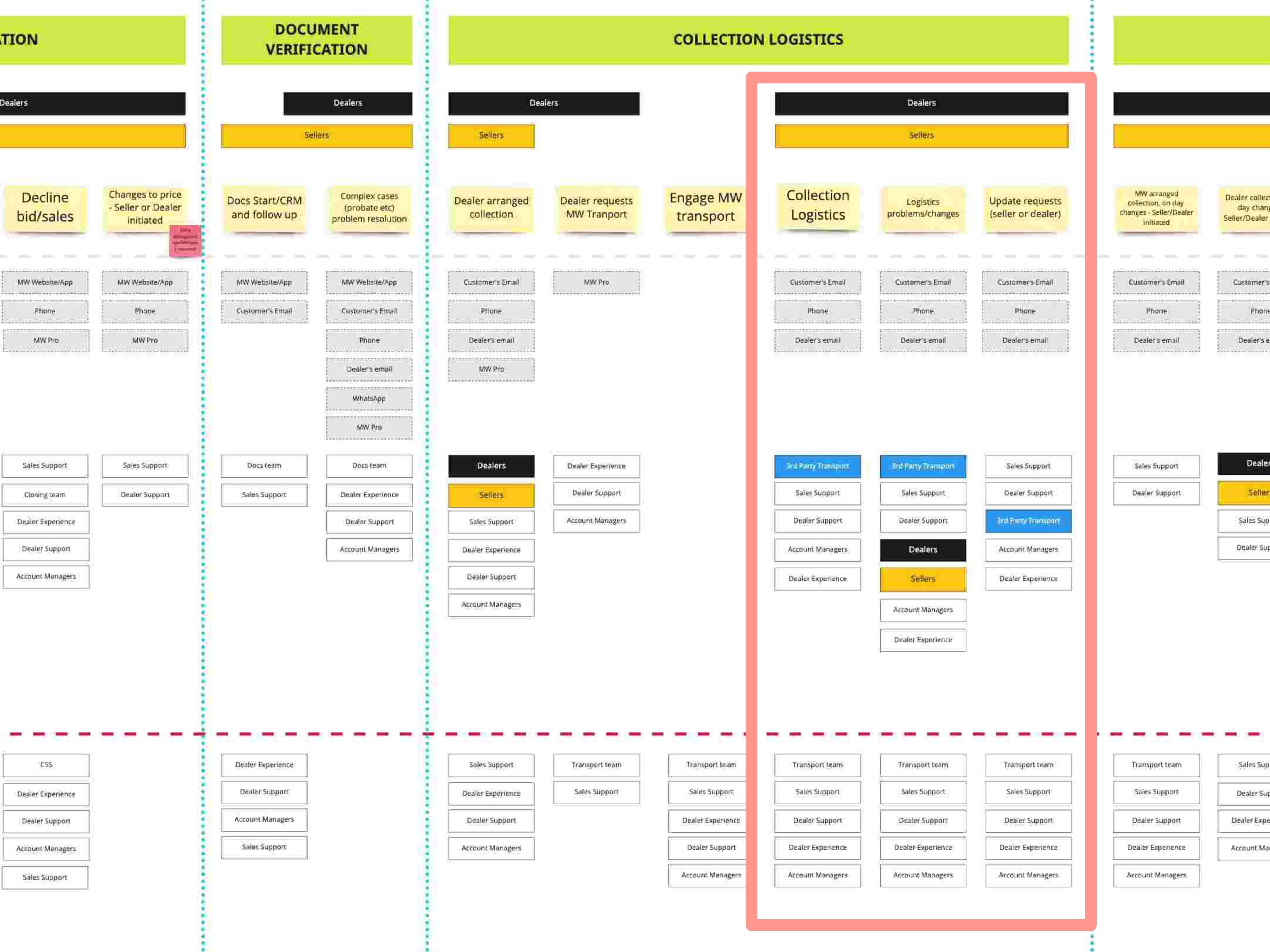
Section of the Motorway service blueprint showing collection-stage issues and the front-of-house and back-of-house teams involved.
How many different front of house and back of house teams could make up touchpoints at the crucial collection stage

Dashboard information architecture

The internal Dashboard had grown organically over time without a coherent vision. Using the mapping of what sections of the app were used by what teams, we modified the roles and permissions of certain user groups.
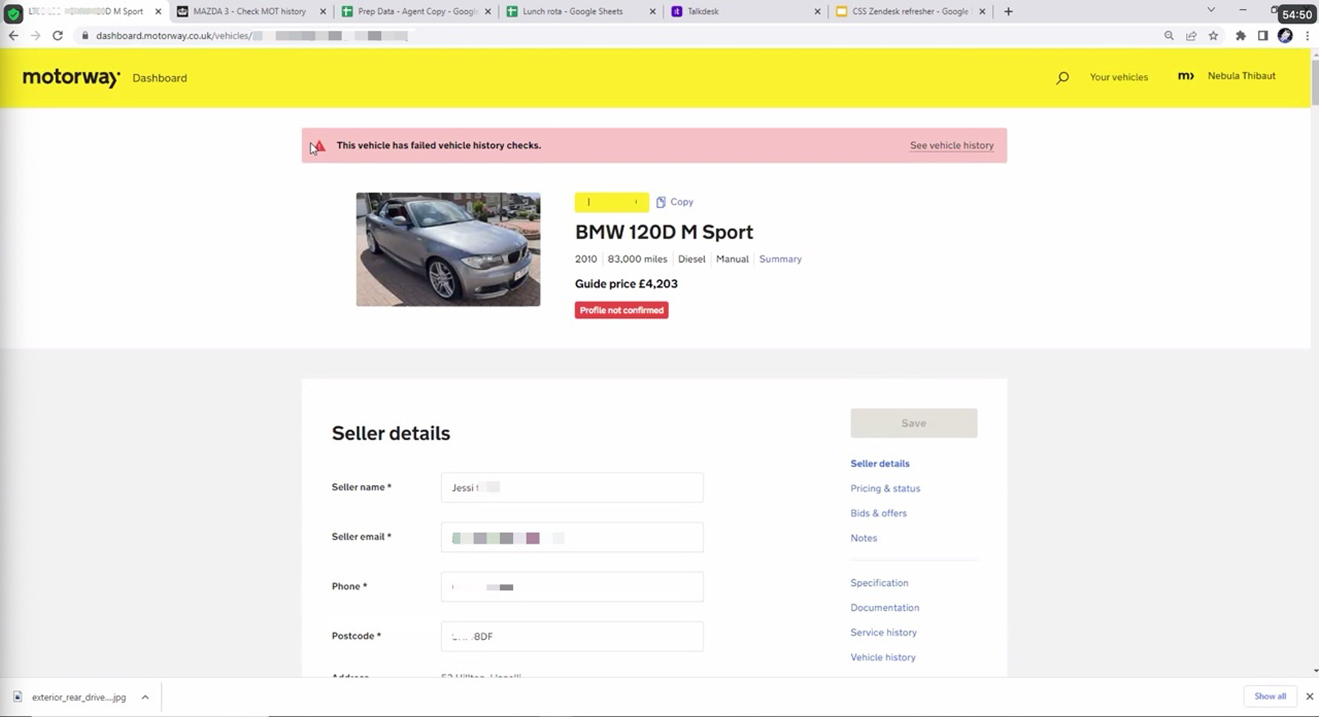
Large screenshot of Brighton depot location in Motorway's transport management system
A screenshot of top of the Dashboard page on a UK Agent screen
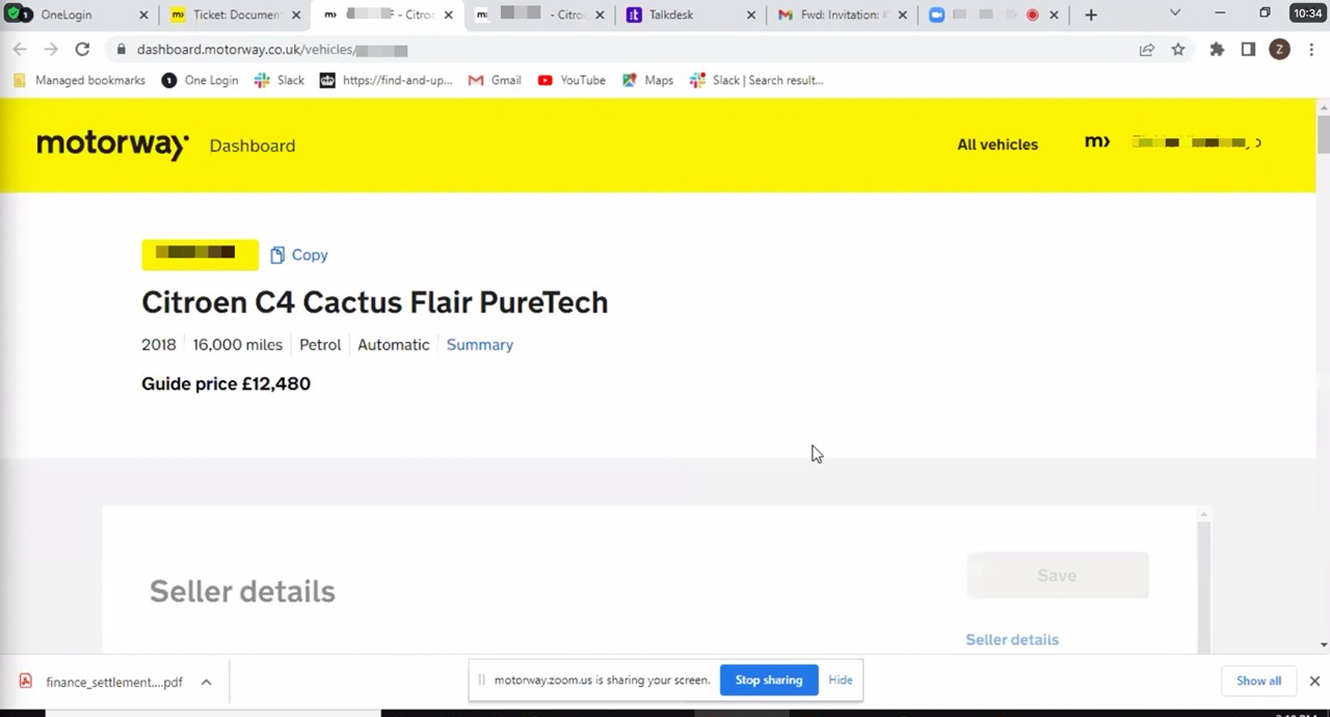
Large screenshot of Durban depot location in Motorway's transport management system
The smaller viewport of the Dashboard page on a South African Agent screen
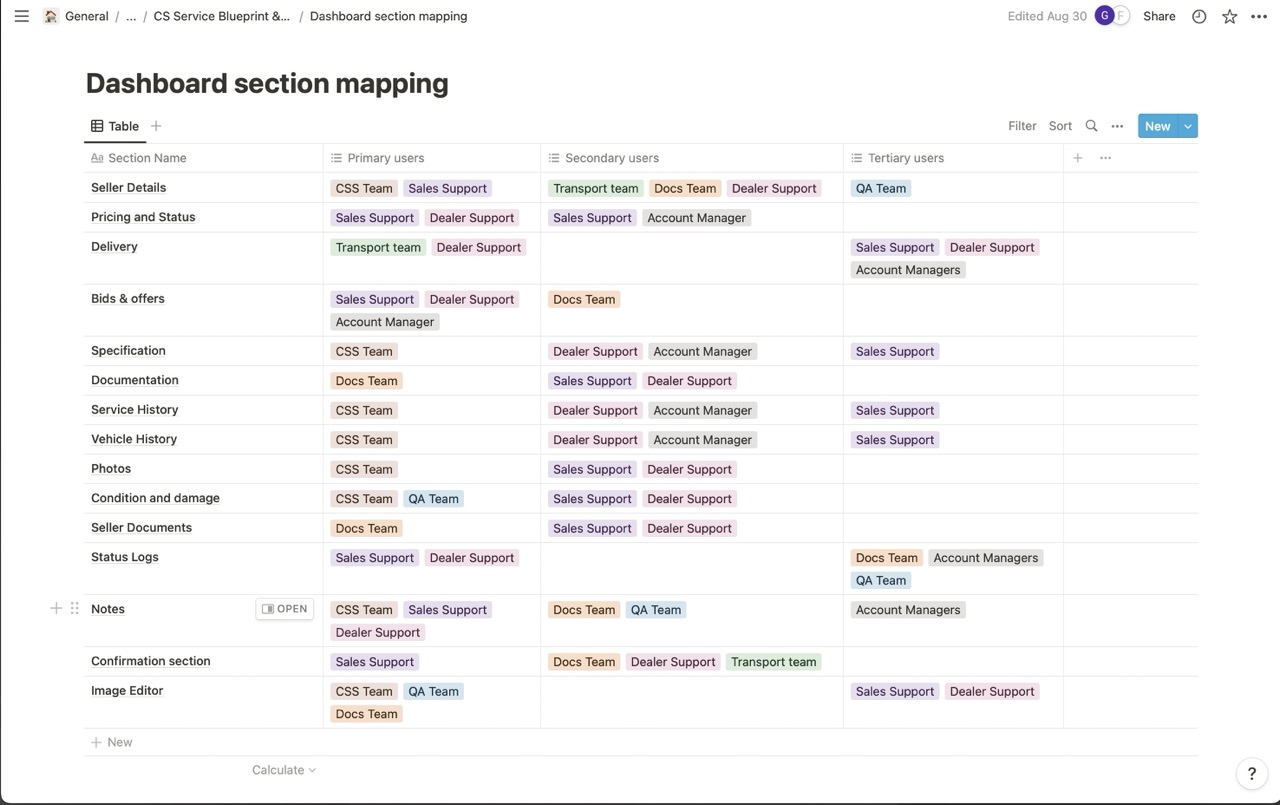
Mapping which sections of the agent dashboard were used by which customer support and sales teams.
Mapping the various segments of dashboard used by various teams, we'd use this to help tailor access to each role type

Screen space was poorly utilised, information was difficult to locate, and there was no clear framework for how new product features should integrate with the agent experience.

*Some work was done to improve and fine-tune the legacy product, along with some standard design guidelines for teams to follow when building out the product further.

Disconnected tooling

With work split between Dashboard and Zendesk, agents lacked clarity on which system to use for what purpose. There was no cohesive vision for how these tools should work together to support customer service operations.

There was patchy automated logging of certain tasks, meaning agents needed to manually type update notes in Zendesk and Dashboard. A specific pain point at the time for the pre-sale team was an image resupply process.

Data accessibility for sales teams

Account Managers expressed a need for better BI tools to access client data on the go. The existing Google Dashboard was too granular and required manager intervention to access detailed reporting — a clunky process that reduced time available for client-facing activities.

Outcomes

Service blueprint focusing future product work

The discovery directly informed several workstreams in the years that followed. One of the primary tools referenced again and again was my Service Blueprint.

This gave product teams a quick idea of which internal stakeholders to involve in various stages, when it came to feature work.

Current state service blueprint mapping customer service journey
My service blueprint of the Motorway end-to-end process

Agent Dashboard features

A focused version of the Agent Dashboard shipped in Q4 2022 for the South African teams. Improving load times and performance of the product, ultimately improving the speed agents were able to work. Reducing call times as a result.

An (eventual) focus on the broader post-sale product

Post-sale product and process improvements were identified as a key theme for the product teams. Though it took the business a few years to allocate product resource to that project. I was able to advise on, and contribute to those later initiatives, my contribution was on the dealer side of the product.

My prototype demoing how we might contain all key post-sale actions to a single page for dealers.

Transport service improvements and investment

A new team, which I joined, focused on Motorway's Collection and Delivery service offering. This included two 0-1 products that shipped early in 2024. To transform the service to become a profit centre for Motorway. You can view it in its own case study linked below.

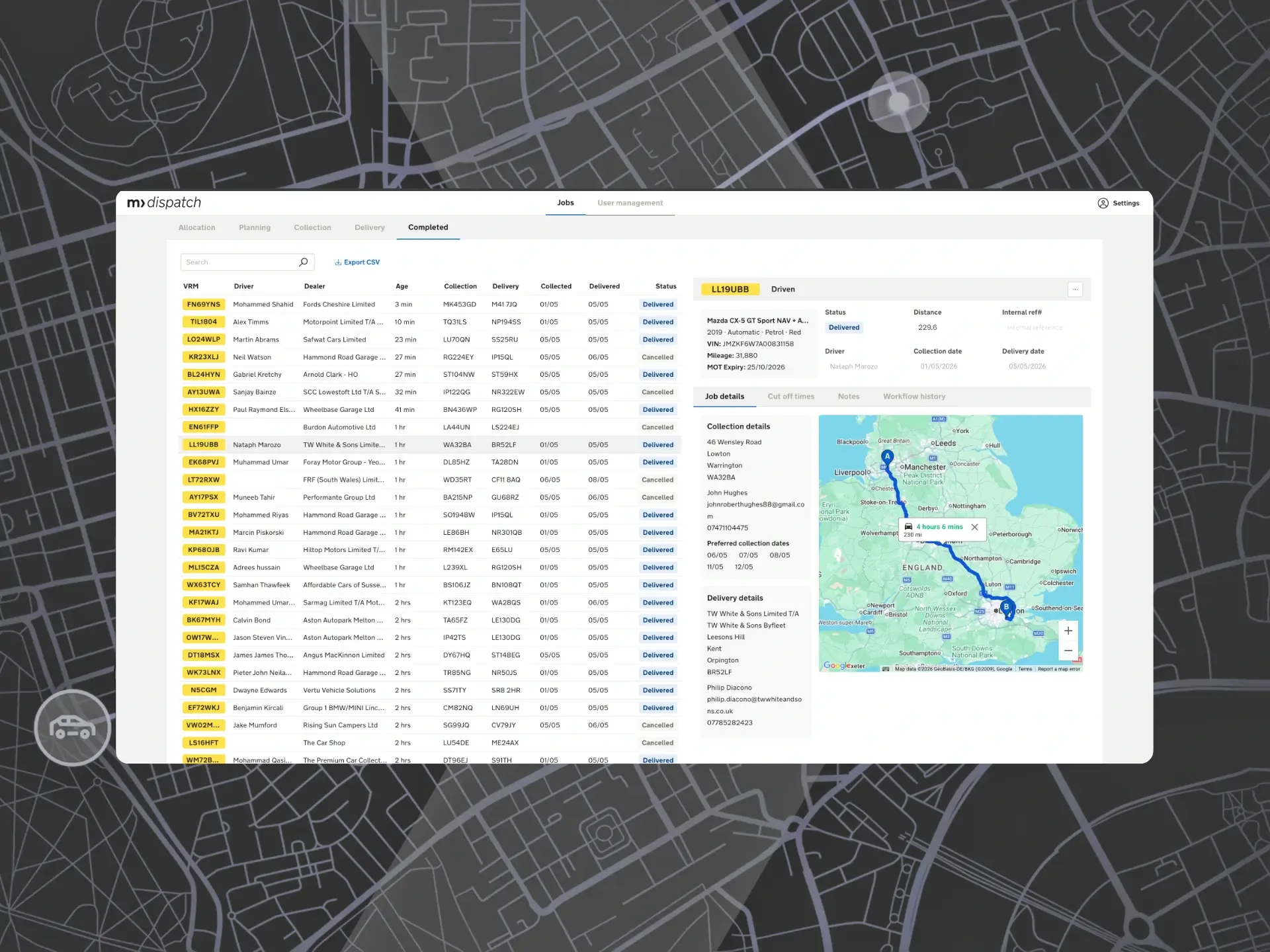
Thumbnail for the Motorway dispatch case study
A 0-1 Transport planning and reporting tool

*Password protected*          A new system used by Motorway and their transportation partners to plan, collect, inspect and deliver vehicles.

2024
Service Design

What I learnt